
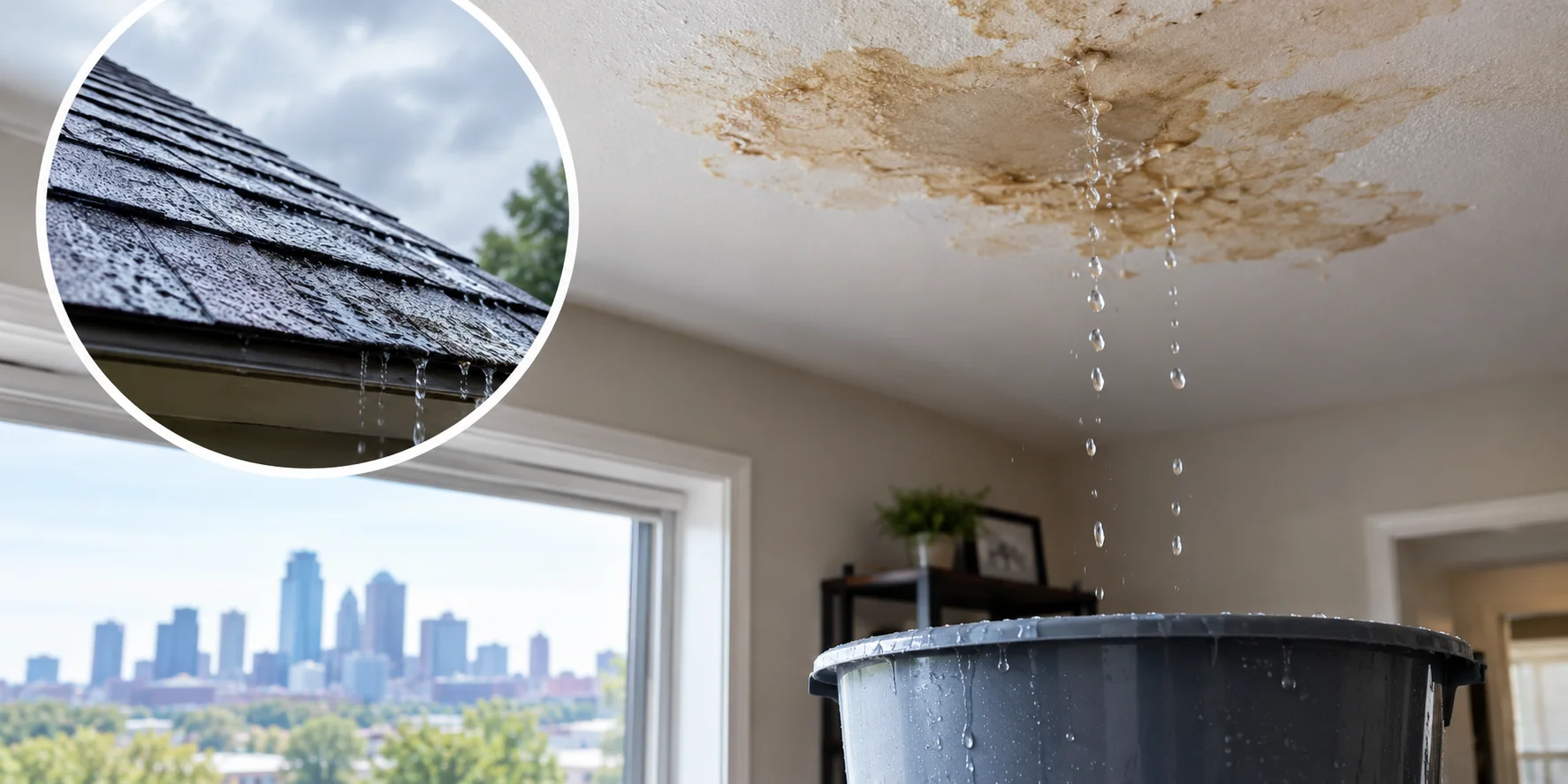
A roof leak does not always announce itself with a dripping ceiling. Sometimes the first sign is a brown stain, peeling paint, a musty smell, or dampness in the attic. By the time water becomes visible inside the house, it may have already traveled through roofing materials, insulation, ceilings, or walls.
Kansas City homes can experience roof problems after heavy rain, strong winds, storms, or ongoing wear. Finding the source and addressing the resulting moisture early can help limit further damage.
Signs of a Roof Leak
Some signs are easy to notice, while others can be subtle. Keep an eye out for:
- Brown or yellow water stains on ceilings or walls
- Peeling, bubbling, or damaged paint
- Damp spots around ceiling fixtures
- Wet or compressed insulation in the attic
- Musty odors
- Dripping or visible water during or after rain
- Damaged or discolored drywall
- Mold growth in areas affected by moisture
A stain does not always appear directly below the point where water entered. Water can move through building materials before becoming visible indoors.
The EPA specifically advises homeowners not to ignore wet spots or water stains caused by roof leaks and recommends addressing leaks and water damage promptly.
What Causes Roof Leaks?
Roof leaks can develop due to several reasons. Damaged or missing roofing materials, deteriorated flashing, clogged or poorly maintained gutters, and storm-related damage can all let water into a home.
Heavy rainfall can also expose existing roof weaknesses. If gutters or downspouts cannot move rainwater away effectively, water may collect around the roof or building and increase the risk of moisture problems.
The exact source is not always obvious from inside the house. A roof inspection may be needed to determine where water is getting in.
How Roof Leaks Can Cause Water Damage
Once water enters through a damaged roof, it can affect areas that are not immediately visible. Ceilings and walls become damp. Insulation can absorb water. Wood and other building materials can remain wet if the affected area is not properly dried.
Moisture can also reach hidden areas around ceilings, walls, and attic spaces. Roof materials above ceilings are one possible location for hidden moisture and mold following roof leaks. This is why drying the visible area alone may not resolve the problem.
Also Read – “Why DIY Water Damage Cleanup Often Makes Things Worse”
Risks of Leaving a Roof Leak Unaddressed
A small leak can become a larger water damage problem if the source is not fixed.
Mold growth
Mold needs moisture to grow. Damp materials that remain wet can create conditions for mold growth. Dry damp areas within 24 to 48 hours when possible to help prevent mold growth. A musty smell or visible mold after a leak may indicate that moisture remains in the affected area.
Damaged ceilings and walls
Water can cause drywall, ceiling materials, paint, and other finishes to stain, swell, soften, or deteriorate. Painting over a wet or moldy surface does not solve the underlying moisture problem. Fix the water source and dry the area before painting.
Hidden moisture
Water can remain behind walls, above ceilings, or in insulation even after the surface appears dry. These areas can be difficult to assess without appropriate inspection.
More extensive restoration
The longer moisture remains, the greater the chance that additional materials will be affected. Early attention can make it easier to identify the affected areas and determine what needs to be dried, cleaned, or replaced.
What to Do When You Discover a Roof Leak
Start by addressing the immediate source of water if it is safe to do so. If the leak is active, place containers under dripping water and move furniture or belongings away from the affected area.
Do not climb onto the roof during rain, strong winds, or other unsafe conditions. Roof repairs are best handled by a qualified roofing professional.
Inside the home, document what you see. Take photographs of stains, damaged materials, standing water, and affected belongings. This information may also be useful if you need to discuss the damage with your insurance company.
If water has affected ceilings, walls, flooring, insulation, or other materials, consider having the area professionally assessed. A proper inspection can help identify moisture that is not visible from the surface.
When You May Need Water Damage Restoration
A roofing contractor and a water damage restoration company may have different roles.
A roofing professional can investigate and repair the roof itself. A restoration company focuses on the water damage inside the property, including affected building materials and drying.
You may need water damage restoration when a roof leak has caused significant interior moisture, standing water, wet drywall, soaked insulation, or other damage that needs to be dried and assessed.
If the leak has resulted in visible mold or a persistent musty odor, mold removal can also need to be considered. The underlying moisture problem should be addressed at the same time.
How to Reduce the Risk of Future Roof-Related Water Damage
Regular roof and gutter maintenance can help identify problems before they result in significant interior damage. After severe weather, check for obvious signs of roof or gutter damage from a safe location. Look for missing or damaged roofing materials, clogged gutters, and other visible problems.
Inside the home, pay attention to new ceiling stains, damp attic areas, peeling paint, or musty odors. Addressing these signs early is generally better than waiting until water damage becomes extensive.
Final Thoughts
A roof leak can be easy to overlook when the only visible sign is a small ceiling stain. But moisture can travel into ceilings, walls, insulation, and other hidden areas before the damage becomes obvious.
If you notice signs of a leak, address the roof problem and check the interior for water damage. Dry affected areas promptly, document the damage, and seek professional help when the extent of the moisture is unclear.
For water damage restoration, mold removal, or storm damage restoration in Kansas City, Rapid Dry can be considered when professional assessment and cleanup are needed.
FAQs
Can a roof leak cause damage even if there is no standing water?
Yes. Water can be absorbed by drywall, insulation, wood, and other materials without collecting visibly on the floor. A small amount of ongoing moisture can still affect these materials over time.
How can I tell if an old ceiling stain is from a current leak?
An old stain can remain after the original leak has been repaired. New discoloration, dampness, peeling material, or changes in the size of the stain can indicate that moisture is still entering the area.
Can roof leaks damage electrical fixtures?
Yes. Water that reaches ceiling fixtures, wiring, outlets, or other electrical components can create a safety hazard. Avoid touching wet electrical fixtures and have the situation assessed by a qualified professional.
Should wet insulation be replaced after a roof leak?
It depends on the type of insulation, how wet it became, and whether it can be thoroughly dried. Water-damaged insulation may need professional assessment to determine whether drying or replacement is appropriate.
Can a roof leak affect the attic before the ceiling?
Yes. The attic can show signs of moisture before water becomes visible in the living space. Wet insulation, damp roofing components, or water marks can sometimes reveal a problem earlier.
How long does it take to dry a home after a roof leak?
There is no single drying time. It depends on the amount of water that enters the property, the materials affected, temperature, humidity, airflow, and how quickly drying begins. A professional assessment can help determine whether materials are adequately dry.