
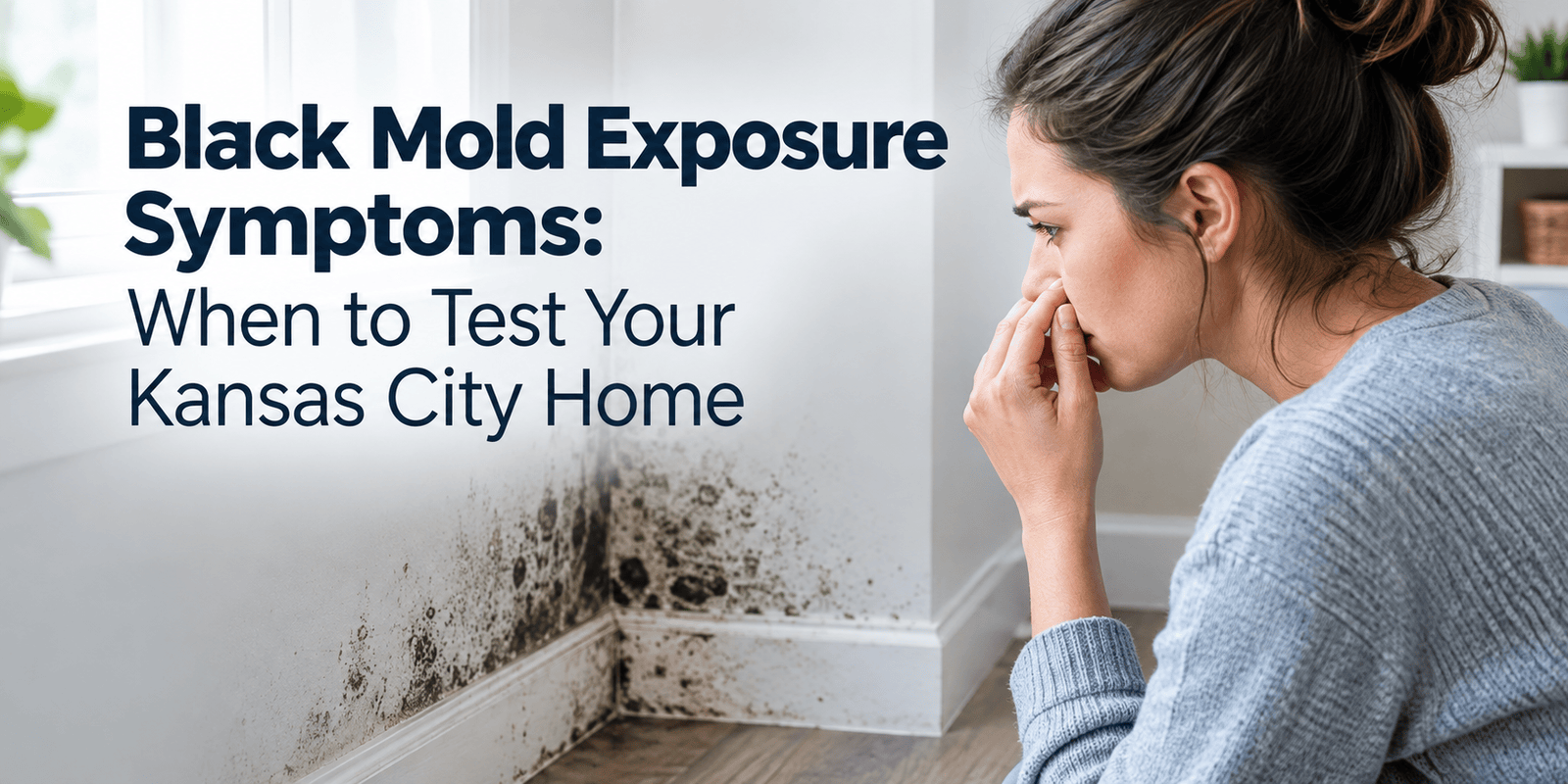
A water leak, flood, plumbing problem, or lingering moisture can create the conditions mold needs to grow inside a home. Some people exposed to damp or moldy environments develop symptoms such as sneezing, coughing, wheezing, itchy eyes, or skin irritation.
The problem is that these symptoms are not specific to black mold. Allergies, asthma, infections, and other indoor irritants can cause similar reactions. The color of mold also cannot tell you whether it is more dangerous.
For Kansas City homeowners, the more useful question is often not whether the growth is “black mold,” but whether there is a moisture or mold problem that needs attention and whether testing would provide useful information.
What Is Black Mold?
“Black mold” is a common term often used for Stachybotrys chartarum, a greenish-black mold that can grow on materials containing cellulose, including fiberboard, gypsum board, and paper. It needs persistent moisture to grow. Water leaks, flooding, condensation, and other moisture problems can create suitable conditions.
Not every dark-colored mold is Stachybotrys chartarum. Indoor mold can appear in many colors, including black, green, gray, white, or brown. The color alone cannot identify the species or determine its health effects. Experts say that it is not necessary to determine the specific type of mold before addressing a mold problem.
What Are the Common Black Mold Exposure Symptoms?
Exposure to damp or moldy environments can cause health effects or no symptoms at all. When people do react, common symptoms can include:
- Sneezing
- Runny or stuffy nose
- Sore or irritated throat
- Coughing
- Wheezing
- Red, itchy, or watery eyes
- Skin irritation or rash
- Worsening asthma symptoms
Mold can irritate the eyes, nose, throat, skin, and lungs. People with mold allergies experience stronger allergic reactions, while people with asthma notice worsening respiratory symptoms.
These symptoms do not establish that mold is the cause. Similar problems can result from seasonal allergies, respiratory infections, dust, asthma, and other indoor air pollutants.
When Symptoms Point to an Indoor Mold Problem
The timing and location of symptoms can provide useful clues. For example, someone might notice more coughing, congestion, or eye irritation after spending time in a damp basement and feel better after leaving the building.
That pattern does not prove that mold is responsible. It does, however, provide a reason to look for visible mold, water damage, leaks, condensation, or other moisture problems.
Persistent or severe symptoms should be discussed with a healthcare professional. Significant breathing difficulty requires medical attention rather than relying on home mold testing.
Can Black Mold Cause Breathing Problems?
It can. Mold exposure can cause respiratory symptoms such as coughing and wheezing, and people with asthma can experience worsening symptoms in damp or moldy environments.
People with weakened immune systems or certain chronic lung conditions can face additional risks from mold exposure. Such people should avoid buildings with mold when possible, particularly during mold cleanup.
If breathing problems are significant or worsening, seek medical care. A mold test cannot diagnose the cause of a person’s symptoms.
Does Black Mold Always Cause Symptoms?
No. Mold exposure does not affect everyone in the same way. Some people have no noticeable reaction, while others experience allergy-like or respiratory symptoms.
Individual responses can also vary based on factors such as:
- Mold sensitivity
- Allergies
- Asthma
- Lungs or respiratory diseases
CDC notes that exposure to damp and moldy environments may cause health effects or none at all.
This is why symptoms alone cannot confirm a mold problem or identify a particular mold species.
Signs of a Mold or Moisture Problem in Your Kansas City Home
Health symptoms are only one part of the picture. Conditions inside the property can provide stronger clues that moisture or mold needs attention.
Visible Mold
Mold can grow on drywall, wood, paper, carpet, insulation, ceiling materials, and other surfaces when enough moisture is present. It can appear in different colors and textures.
If you can see mold, identifying whether it is specifically black mold is usually less important than addressing the growth and the moisture that allowed it to develop.
A Persistent Musty Odor
A musty smell can indicate dampness or mold, especially when there is no obvious source.
The odor might come from areas that are difficult to inspect, such as behind drywall, under flooring, above ceilings, around plumbing, or inside other building cavities.
Previous Water Damage
A leaking pipe, roof problem, flooding event, or appliance leak can leave moisture inside building materials even after the visible water is gone.
Drying wet materials as soon as possible is a must. Materials and areas that are dried within 24 to 48 hours after a leak or spill will, in most cases, be less likely to support mold growth.
Recurring Moisture or Condensation
Repeated leaks are not the only concern. Condensation and high indoor humidity can also contribute to mold growth.
EPA recommends keeping indoor relative humidity below 60%, with an ideal range of about 30% to 50% when possible.
When Should You Test Your Kansas City Home for Mold?
Mold testing is not automatically necessary.
If visible mold is already present, sampling is generally unnecessary. There are also no federal standards that establish a safe or unsafe level of airborne mold spores inside homes. This is the reason an air test does not provide a simple pass-or-fail answer about whether a home is safe.
Testing or professional assessment can be worth considering when:
- You suspect hidden mold but cannot locate the source.
- There is a persistent musty odor without visible growth.
- The extent of a mold problem is unclear.
- You need information that could affect remediation decisions.
- You want professional evaluation after remediation.
- Documentation is needed for a specific property or dispute.
The purpose of testing should be clear before samples are collected. Professional sampling should be performed by people experienced in mold assessment, sampling methods, and interpretation of results.
Are Home Mold Test Kits Worth Using?
DIY mold test kits seem like an easy way to find out whether mold is present or not. Their results, however, can be difficult to interpret.
Mold spores are already present in indoor and outdoor environments. A sample collected from one location at one point in time might not represent conditions elsewhere in the home. It also cannot tell you whether the mold is responsible for a person’s symptoms.
It is not recommended to rely on mold testing to determine whether someone will become sick. Its guidance emphasizes removing mold and correcting the moisture problem instead.
If you are considering testing, start with a specific question that the test is supposed to answer. That can help determine whether sampling is actually useful.
Should You Test for Black Mold Specifically?
Usually, identifying the exact species is not the main priority.
CDC states that there is currently no test that proves an association between Stachybotrys chartarum and particular health symptoms. It also explains that determining the type of mold in a building is generally unnecessary before taking action.
Instead, focus on practical questions:
- Where is the moisture coming from?
- Is mold visible or potentially hidden?
- How extensive is the affected area?
- Which building materials are involved?
- What steps are needed to correct the moisture and address the mold?
These questions can be more useful than simply determining whether the growth is Stachybotrys chartarum.
What If You Smell Mold but Cannot See It?
A persistent musty odor without visible mold deserves further investigation, particularly if the property has a history of leaks or water damage.
Hidden mold can occur:
- Behind drywall or wallpaper
- Under carpet or carpet padding
- Above ceiling materials
- Around leaking pipes
- Inside wall cavities
- Near roof leaks
- In other areas affected by past water intrusion
Investigating hidden mold can disturb contaminated materials and release spores. Experts recommend caution when looking for hidden mold and suggest considering an experienced professional when the investigation requires disturbing potential mold growth.
What Should You Do If You Have Mold Exposure Symptoms?
Start by paying attention to both your health and the condition of the property.
If you find mold or persistent moisture, address the source rather than simply covering the affected area. Fix leaks, reduce excess humidity, and make sure wet materials are properly dried.
If symptoms continue, speak with a healthcare professional. Coughing, wheezing, congestion, itchy eyes, and skin irritation can have many possible causes, so medical evaluation may be needed to determine what is behind them.
People with asthma, mold allergies, weakened immune systems, or certain chronic lung conditions might need additional precautions around mold.
How Rapid Dry Kansas City Can Help With Mold Concerns
When mold is suspected after water damage, finding the moisture source is an important part of assessing the problem.
Rapid Dry Kansas City provides mold assessment, inspection, testing, and mold removal services for homes and businesses in Kansas and Missouri. The company also handles water damage restoration and structural drying, which can be relevant when mold concerns follow leaks, flooding, or other water-related problems.
A professional assessment can be useful when mold is extensive, keeps returning, may be hidden, or is associated with an unresolved moisture problem.
Final Thoughts
Black mold exposure symptoms can include respiratory, allergy-related, and skin symptoms, but they do not prove that black mold is responsible. The condition of the property provides important context. Visible growth, musty odors, water damage, and recurring moisture can all indicate that further investigation is needed.
Testing is not automatically required when mold is visible. In many cases, identifying the moisture source and addressing the mold is more useful than determining its exact species. When the problem is hidden or the next step is unclear, professional assessment can help determine what needs to happen.
FAQs
How long does it take for mold to grow after water damage?
Mold can begin growing when damp materials remain moist. It usually takes a day or two to begin its growth and spread.
Can mold grow in a Kansas City home during winter?
Yes. Indoor mold growth can occur during any season when moisture is present. Winter heating does not eliminate problems caused by indoor humidity.
Can mold grow behind furniture?
Yes. Furniture placed against a damp or cold wall can restrict airflow and create conditions where condensation or moisture persists.
Does cleaning mold with bleach solve the problem permanently?
Not necessarily. Cleaning does not remove the moisture source that allowed mold to grow. EPA recommends correcting the underlying moisture problem and cleaning and removing affected materials as appropriate.
Can a mold problem return after cleanup?
Yes. If the underlying moisture problem remains, new mold growth can occur.
Can a mold test tell me if mold is causing my symptoms?
No. A mold test cannot establish that a person’s symptoms are caused by mold. Health reactions vary between individuals, and symptoms associated with mold can have other causes. Persistent symptoms should be evaluated by a healthcare professional.
What indoor humidity level helps reduce mold growth?
Experts say that keeping indoor relative humidity below 60%, ideally between 30% and 50% can slow or reduce mold growth. A basic humidity meter can help monitor conditions inside the home.