
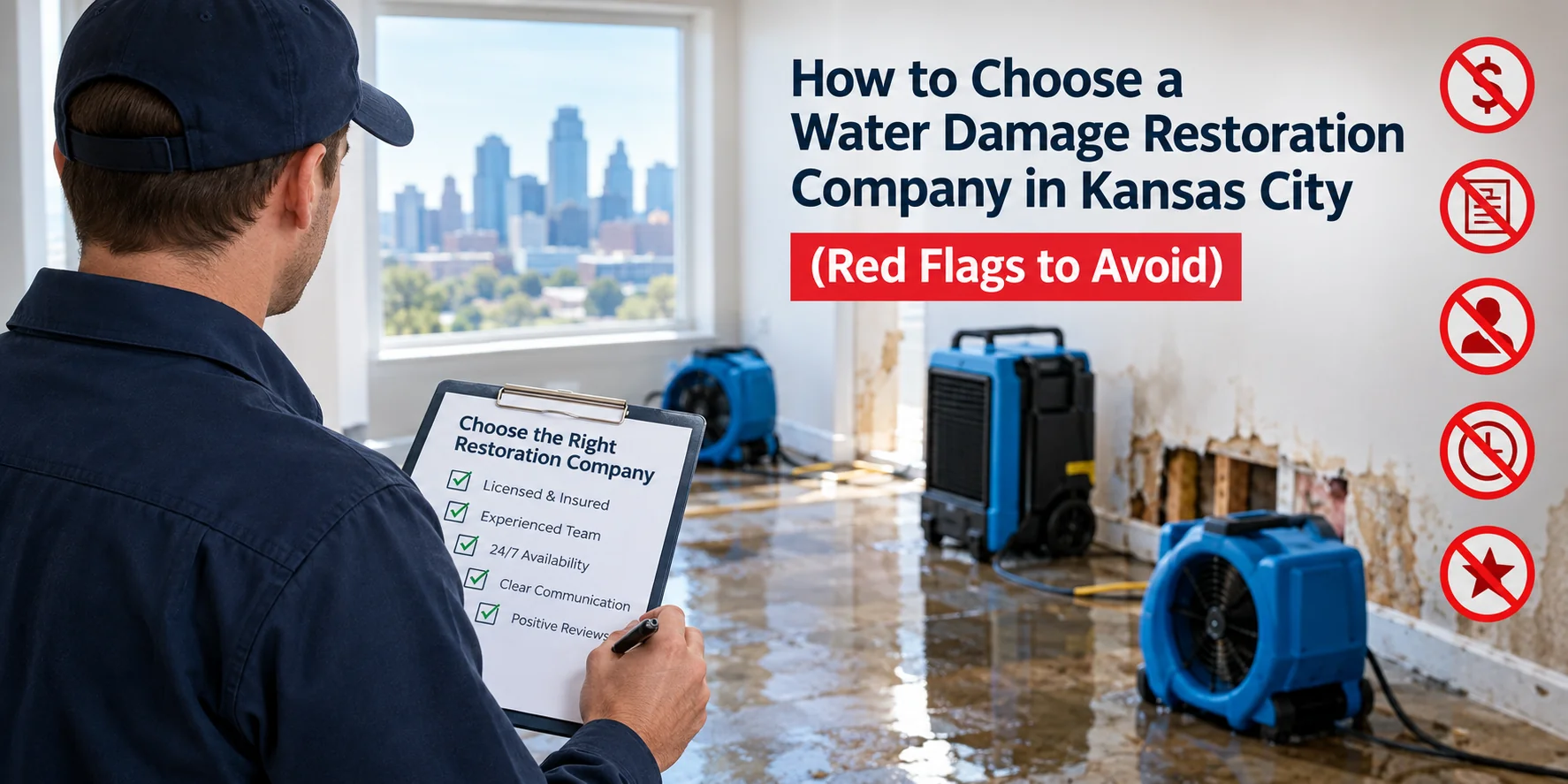
When water enters a home or business, finding a restoration company can quickly become a priority. A burst pipe, appliance leak, storm damage, or sewage backup may leave you dealing with standing water and damaged materials. At that point, it is easy to choose the first company that answers the phone.
A better approach is to spend a few minutes checking who you are hiring and what the company plans to do. The right questions can help you compare your options and spot warning signs before work begins.
Here is what to look for when choosing a water damage restoration company in Kansas City.
Check Training and Credentials
Start by asking about the technicians who will handle the job. Find out what training they have and whether the company or its technicians hold relevant restoration certifications.
IICRC offers certifications specifically related to water damage restoration. Its Water Damage Restoration Technician (WRT) certification covers water damage, its effects, and techniques used to dry affected structures. IICRC also offers Applied Structural Drying (ASD) certification for professionals working with water-damaged structures and contents.
Certification is not the only thing to consider, but it gives you something specific to verify.
Ask:
- What restoration training do your technicians have?
- Are relevant certifications current?
- Can I verify those credentials?
- Is the company insured?
Red flag
Be cautious when a company cannot clearly explain its technicians’ training or refuses to provide basic business and credential information.
Ask How the Damage Will Be Inspected
A proper inspection should look beyond the water you can see.
Moisture can affect flooring, walls, cabinets, insulation, and other materials. The restoration company should assess the affected areas and explain what it found before recommending the work.
Ask how the company will identify affected areas and how moisture will be checked during the job. You should also receive an explanation of which materials can be dried or restored and which may need to be removed.
Red flag
Be careful if someone gives you a firm scope of work without properly inspecting the property.
Find Out How Drying Will Be Monitored
Water removal is only one part of restoration. The affected structure also need to be dried and monitored.
The ANSI/IICRC S500 Standard for Professional Water Damage Restoration covers inspections, drying technology, equipment, documentation, and structural restoration procedures.
You do not need to know the technical details of the standard. Instead, ask practical questions:
- What equipment will be used?
- How will moisture levels be checked?
- How will you know when the affected areas are dry?
- Will drying progress be documented?
The answers can tell you whether the company has a defined process rather than simply removing visible water.
Red flag
Be cautious if a company cannot explain how it will determine whether affected areas have dried.
Get the Work and Cost in Writing
Before approving restoration work, ask for a written agreement or estimate that clearly explains what the company will do and what you will be charged.
Depending on the damage, the scope may include water extraction, drying, removal of damaged materials, cleaning, or other necessary work. You should be able to understand which services are included before work starts.
Missouri Attorney General guidance recommends getting the work, cost, and projected completion date in writing before work begins. It also advises consumers to research the company and obtain multiple bids when possible.
Red flags
- Refusing to provide written details
- Giving a vague price with no explanation
- Adding unexpected work without discussing it
- Asking you to approve costs you do not understand
Be Careful With Large Upfront Payments
Ask when payment is expected and what the payment covers.
Missouri consumer guidance advises against prepaying for work and recommends getting a written contract before making a payment. It also notes that a reasonable down payment may be required for some projects.
This does not mean every payment arrangement is the same. The important point is to understand the agreement before handing over money.
Red flag
Pressure to make a large payment immediately, particularly without a written agreement, should make you stop and review the arrangement carefully.
Ask How Insurance Documentation Is Handled
If you plan to file a water damage insurance claim, ask what documentation the restoration company can provide.
Photos, moisture readings, estimates, invoices, and records of the work may be useful when keeping track of a claim. Ask what records you will receive and keep copies for your own files.
Do not assume that a restoration company can determine what your insurance policy will cover. Coverage depends on your policy and the circumstances of the loss.
Red flag
Be cautious of anyone who guarantees that your insurance will pay a specific amount or cover every part of the restoration before your insurer has reviewed the claim.
Check Reviews and Business Information
Reviews can give you useful information about previous customers’ experiences, but they should not be your only source of information.
Look for patterns in comments about:
- Communication
- Response times
- Work quality
- Billing
- Whether the agreed work was completed
You can also check whether the company provides clear contact information and whether its business details are easy to verify.
For a non-emergency situation, comparing more than one company can give you a better idea of the proposed scope and cost.
Red flag
Be cautious when you cannot verify basic business information or find consistent details about the company.
Watch for High-Pressure Sales Tactics
A water emergency can make you feel like you need to make a decision immediately. A restoration company should still be willing to answer reasonable questions.
Be cautious if someone:
- Tells you to sign immediately without reviewing the agreement
- Refuses to explain the recommended work
- Uses fear to push additional services
- Makes promises about insurance that cannot be guaranteed
- Discourages you from comparing other companies
Professional communication should leave you with a clear understanding of what is being recommended and why.
Pay Attention to the Type of Water Damage
Not every water loss presents the same situation.
Water from a leaking supply line is different from water that has come into contact with sewage or other contaminants. If the property has experienced a sewage backup, ask whether the company has experience handling that type of sewage cleanup.
The same applies when prolonged moisture has resulted in suspected mold. Ask what services are actually needed instead of assuming that every water damage company handles every type of problem in the same way.
Red flag
Be careful if a company treats contaminated water or suspected mold as a simple surface-cleaning job without discussing the conditions involved.
Common Red Flags to Keep in Mind
Before hiring a company, step back and consider the overall picture.
You may want to keep looking if the company:
- Cannot explain its qualifications
- Does not properly inspect the affected area
- Will not provide written details about the work
- Gives unclear or changing prices
- Pressures you to sign immediately
- Requests significant payment without a written agreement
- Makes guarantees about insurance coverage
- Cannot explain how drying will be monitored
- Provides little verifiable business information
One warning sign does not necessarily tell you everything about a company. However, several of these issues together deserve closer attention.
A Quick Checklist Before You Hire
Before choosing a restoration company, make sure you have clear answers to these questions:
- Who will inspect the damage?
- What training or certifications do the technicians have?
- How will affected areas and moisture be identified?
- What work is included in the estimate?
- How will drying be monitored?
- What documentation will I receive?
- How will payment work?
- What information will be provided for an insurance claim?
- Does the company have experience with this type of water damage?
- Can I verify the company’s business information?
If you are unsure about any major part of the agreement, ask questions before approving the work.
Final Thoughts
Choosing a restoration company does not have to mean making a rushed decision. Even during an emergency, you can check credentials, ask how the damage will be assessed, understand the proposed drying process, and get the work and costs in writing.
The biggest warning signs are usually straightforward: unclear pricing, missing information, pressure to sign, unexplained work, and promises that sound too certain.
For property owners looking for water damage restoration, mold removal, sewage removal, or basement flooding cleanup in the Kansas City area, Rapid Dry is one local restoration company to consider.
FAQs
What should I ask a water damage restoration company before hiring them?
Ask about technician training, relevant certifications, the inspection process, drying methods, estimated costs, documentation, and how they handle insurance-related paperwork.
Should a water damage restoration company provide a written estimate?
Yes, you should ask for the scope of work and costs in writing before approving the work.
What are common red flags when hiring a restoration company?
Be cautious about unclear pricing, pressure to sign immediately, requests for large upfront payments, unverifiable credentials, vague explanations of the work, or promises about insurance coverage that cannot be guaranteed.
How many restoration companies should I contact?
For non-emergency work, comparing two or three companies can give you a better understanding of the proposed work and pricing.