
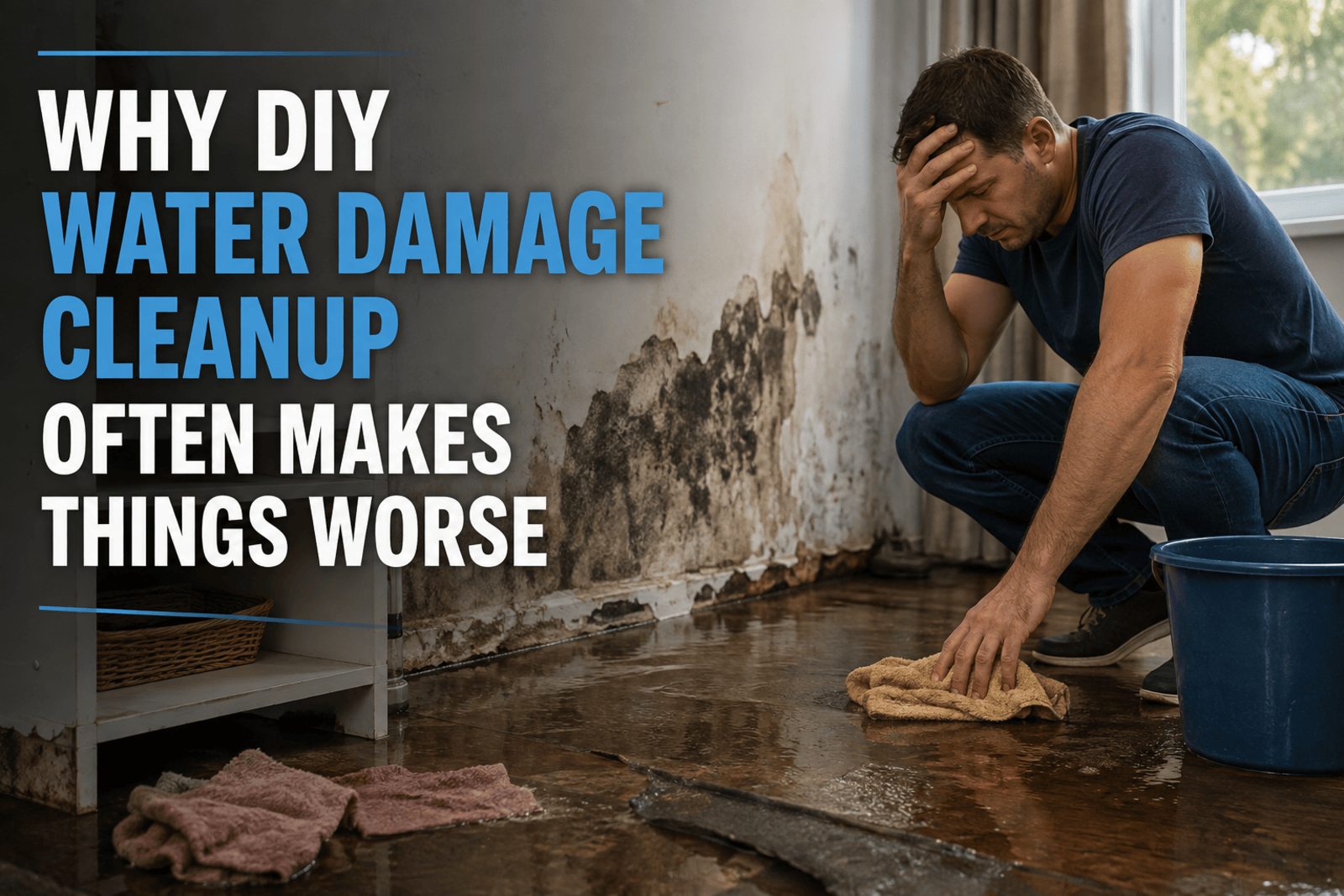
You see water damage, and the first thing you do is act immediately. You grab towels, a wet/dry vacuum, or turn on extra fans and drying equipment and start cleaning. The thing you should understand is that, for a small, clean-water spill, some basic cleanup can be reasonable but for a larger or hidden water damage, things are different.
DIY water damage cleanup can sometimes make the problem worse if water is not fully removed, wet materials are left behind, or contaminated water is handled without the right protection. What looks like a dry floor can still have moisture inside walls, flooring, insulation, or other materials.
This is why it is said that DIY cleanup can go wrong. You should know how to decide when it is safe to handle a problem yourself and when professional help is the better option.
Water Damage Is More Than Standing Water
One of the biggest mistakes is assuming that removing visible water means the cleanup is finished. Water can move underneath flooring, also move into drywall, and under cabinets. Some materials can also absorb and hold moisture after the surface appears dry. It is important to dry wet materials within a day to prevent mold growth.
This is why simply wiping the floor or running a household fan is not enough to solve the entire problem. The affected area needs to be dried thoroughly, not just made to look dry.
7 Reasons DIY Water Damage Cleanup Should Be Avoided
1. DIY Cleanup Leaves Hidden Moisture Behind
A towel can remove surface water. It cannot tell you how much moisture remains underneath the surface. Just think: water from a leaking appliance spreads beneath flooring before you notice it. A pipe leak inside a wall can also leave insulation and drywall damp for longer than expected.
If these areas are not properly dried, moisture can remain trapped and create conditions for mold growth. Mold can grow on materials such as wood, drywall, carpet, and furniture when moisture remains present.
Professional water damage cleanup may involve checking affected materials and monitoring the drying process rather than relying only on how a surface feels.
2. Mold Can Become a Bigger Problem
Mold is one of the main concerns after water damage. Mold spores are already present in indoor and outdoor air. They become a problem when they land on damp materials and begin to grow. Moisture control is the key to preventing indoor mold growth.
A common DIY mistake is cleaning what can be seen while missing moisture underneath or behind it. Another problem is waiting too long to begin drying. If mold has already developed, simply spraying a cleaner on the visible area does not address the moisture source. The water problem must also be corrected, or the mold may return.
3. Using Fans the Wrong Way Can Spread Mold
Fans can move air and speed up drying when conditions are appropriate, but turning on the fans is not always the right first step. If visible mold is already present, fans should be avoided because using fans before the mold has been gently cleaned can spread mold spores to other areas.
This is an important difference between drying a clean-water spill and dealing with an established mold problem. The cleanup method needs to match the type and extent of damage.
4. Contaminated Water Is Not a Normal Cleaning Job
Not all water damage is equally safe to handle. Water from a clean supply line is different from water that has come from a sewage backup, toilet overflow, flood, or other contaminated source. Floodwater can contain sewage, bacteria, chemicals, and other hazards. Experts recommend avoiding contact with floodwater because of possible contamination.
Trying to clean contaminated water without suitable protective equipment can expose you to harmful substances. Porous materials that have been contaminated should also be removed rather than simply cleaned.
Sewage-related damage is especially important to treat carefully. Professional inspection and servicing for damaged septic systems is necessary because of the hazards involved.
5. Water Can Create Electrical Hazards
Water and electricity are a dangerous combination. If water has reached outlets, electrical equipment, appliances, wiring, or other electrical components, do not try to clean it yourself. Doing so can create an electric shock risk. Also, do not touch wet electrical equipment or electrical equipment while standing in water.
A flooded area should be considered unsafe until the electrical hazards have been properly addressed. If you cannot safely reach the electrical panel without entering water, do not take the risk. A qualified electrician can assess the situation.
6. Wet Materials May Need More Than Cleaning
Some household materials can be dried and kept. Others may be too damaged or contaminated to save.
- Carpet
- Insulation
- Drywall
- Ceiling materials
- Mattresses
- Upholstered furniture
All these things and other porous materials can absorb water deeply. If these cannot be thoroughly cleaned and dried, replacement should be made rather than using the damaged ones.
Experts recommend some water-damaged materials should be discarded when they cannot be adequately dried or used when mold is present. Trying to save everything can sometimes prolong the moisture problem. Keeping a damaged material in place simply because it looks usable can give mold more time to develop.
7. Household Cleaning Products Can Cause New Problems
Another common DIY mistake is using too many cleaning products or mixing them together. Bleach should never be mixed with ammonia or other cleaning chemicals. Certain combinations can create toxic vapors. Follow product labels and use disinfectants only as directed.
More cleaning products does not automatically mean better cleaning. The right cleaning method depends on the material and the type of water involved.
What Can You Safely Do Yourself?
Not every water incident requires professional restoration. If a small amount of clean water has spilled on a hard, easily accessible surface and there is no electrical hazard, you can remove the water, clean the surface, and dry the area yourself.
Act quickly. Remove standing water, dry affected items, improve airflow when appropriate, and keep checking the area for remaining dampness. The situation becomes more complicated when water has spread into walls, floors, ceilings, insulation, or other hidden spaces.
When Should You Stop DIY Cleanup?
Professional help is worth considering when:
- A large area has been affected.
- Water has entered walls, floors, ceilings, or insulation.
- The source of the water is unknown.
- Water came from sewage, flooding, or another contaminated source.
- Mold is already visible.
- Electrical systems or appliances have been exposed to water.
- Materials remain wet despite your initial drying efforts.
- You notice a persistent musty smell.
- You are unsure whether the structure is safe.
Flood cleanup can be difficult and dangerous and that experienced, qualified professionals are the better choice in some situations.
People with asthma, weakened immune systems, and certain other health concerns should also avoid taking part in mold or flood cleanup. Children and pregnant people should not participate in flood cleanup.
What Proper Water Damage Cleanup Involves
Effective cleanup is not simply about getting rid of visible water. It generally involves the following:
- Identifying the source of water
- Removing standing water
- Assessing affected materials
- Drying the area thoroughly
- Checking materials that cannot be safely restored
The main goal of proper water damage cleanup should be to stop moisture from remaining where it can cause additional damage or support mold growth.
Quick action is necessary, but rushing into cleanup without considering safety can create another problem. Take photographs of the damage before removing materials when possible, especially if you may need to document the loss for insurance purposes.Document the damage and contact your insurance company before beginning major cleanup after a disaster.
Final Thoughts
DIY water damage cleanup work for a small, straightforward spill, but larger damage can be much harder to assess than it appears. Hidden moisture, mold, contaminated water, damaged materials, and electrical hazards can turn a simple cleanup into a bigger problem.
The safest approach is to act quickly while also knowing your limits. If water has spread beyond surfaces you can safely clean and dry, getting an experienced restoration professional involved can help prevent the damage from becoming more extensive.
For homeowners dealing with serious water damage, Rapid Dry can provide professional water damage restoration support to address the problem properly.