
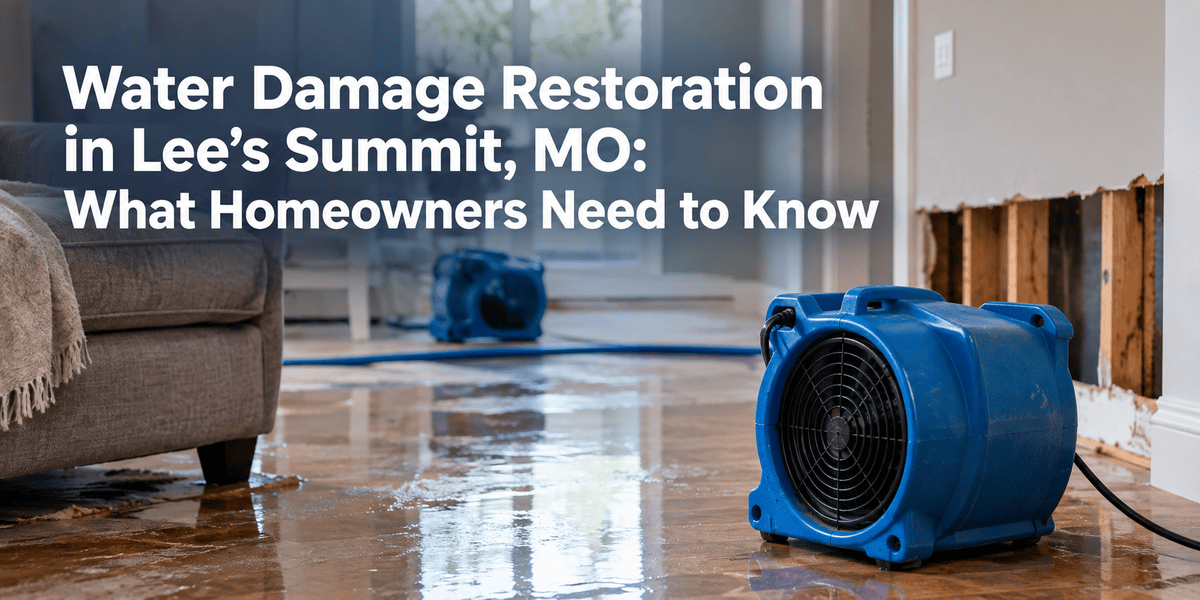
Water damage rarely stays where it starts. A leaking pipe is not leaking from where it is visible; it can send moisture under the floors and other parts of the home. A washing machine leak can cause more damage than you think.
Heavy rain is also a main cause of water damage, as it can push water into a basement before you have time to react. By the time the damage becomes obvious, moisture has already reached places that are difficult to see or dry.
That is why the first response is important. Removing visible water is only part of the job. You also need to check affected areas for hidden moisture, dry them properly, and assess the damage. If you need water damage restoration in Lee’s Summit, MO, knowing what to do first can prevent a small water problem from turning into a much larger one.
What Causes Water Damage in Lee’s Summit Homes?
Water damage can come from several sources. Common problems that become the major cause of this problem are as follows:
- Burst pipes
- Leaking pipes
- Water heaters and other equipment failures
- Washing machine and dishwasher leaks
- Overflowing toilets, sinks, or drainage
- Roof leaks
- Basement flooding
- Storm-related water intrusion
- Sewer backups
- Sump pump failures
A small plumbing leak can also become a larger problem if water remains hidden behind walls or underneath flooring.
What Should You Do After Water Damage?
The first few steps are important and must be followed by everyone.
1. Stop the Water Source
Turn off the main water supply if a plumbing failure is causing the damage. For an appliance leak, shut off the appliance’s water supply if you can do so safely. If the water is coming from outside, such as through a damaged roof, avoid putting yourself at risk while trying to stop the intrusion.
2. Stay Away From Electrical Hazards
Do not walk through standing water if electrical outlets, appliances, cords, or electrical equipment are submerged. Contact a qualified professional if there is a possible electrical hazard.
3. Move What You Safely Can
Remove furniture, boxes, rugs, and other belongings from wet areas if they can be moved without creating a safety risk. Place items somewhere dry and well-ventilated.
4. Remove Standing Water
Small amounts of clean water can sometimes be handled with towels or a wet-dry vacuum. Larger amounts of water usually require professional extraction equipment. Do not attempt to clean sewage-contaminated water yourself. Sewage can contain harmful contaminants and requires proper cleanup and disinfection.
Why Fast Water Removal Is Necessary
Water does not stay in one place. It can move into flooring, drywall, cabinets, insulation, and other building materials. Moisture also remains hidden after visible water has been removed. That is why professional restoration involves more than simply drying the surface.
Rapid Dry’s restoration process includes a structured method to resolve the water damage issue in your property. Moisture assessment, water extraction, dehumidification, drying, and evaluation of affected materials. The company also documents moisture readings and restoration work when an insurance claim is involved.
Fast action can also reduce the risk of secondary damage. Prolonged moisture can contribute to mold and deterioration of building materials.
When Should You Call a Water Damage Restoration Company?
Professional help is worth considering when:
- Water covers a large area
- Water has entered walls or ceilings
- A basement or crawl space has flooded
- Flooring or drywall remains wet
- Water came from a sewage backup
- You cannot find the source of hidden moisture
- The property has significant storm or flood damage
- You are unsure whether the affected materials are completely dry
Professional restoration companies use moisture meters, extraction equipment, air movers, and dehumidifiers to help dry affected areas.
The goal is not simply to make the room look dry. The affected structure needs to be properly evaluated and dried.
What Does Water Damage Restoration Involve?
The exact process depends on the source and severity of the damage. A typical restoration may include several stages.
Inspection and Moisture Assessment
Technicians identify where water has spread and check materials for hidden moisture. Water can sometimes travel beneath flooring or behind walls.
Water Extraction
Standing water is removed with commercial extraction equipment. Removing water quickly helps reduce additional damage.
Drying and Dehumidification
Air movers and dehumidifiers help remove moisture from building materials and the surrounding air. Drying can take time, depending on the amount of water, materials affected, temperature, and humidity.
Cleaning and Sanitizing
Affected surfaces need cleaning and sanitizing. This is especially important when water comes from a contaminated source.
Removal of Damaged Materials
Some materials may not be suitable for restoration after extensive or contaminated water exposure. Damaged drywall, carpet, insulation, or other materials may need to be removed.
Final Moisture Check
A proper restoration process should confirm that affected areas have reached appropriate dry conditions before reconstruction or other repairs begin.
Clean Water, Contaminated Water, and Sewage
Not all water damage carries the same risks.
Water from a broken supply pipe is less contaminated than water from a toilet overflow or sewer backup. Sewage-contaminated water presents additional health concerns and should be handled by trained professionals.
The source of the water also affects which materials can be safely cleaned and which may need removal.
What About Mold After Water Damage?
Mold can become a concern when moisture remains in a property. Removing standing water is only the first step. Affected materials need to be dried properly, including areas that are not immediately visible.
Homeowners should pay attention to musty odors, visible growth, staining, or materials that remain damp after a water event. The best approach is to address moisture quickly instead of waiting for visible mold to appear.
Does Homeowners Insurance Cover Water Damage?
Coverage depends on the cause of the damage and the terms of the individual policy.
Sudden and accidental water damage, such as some burst-pipe or appliance-related losses, may be covered. Flooding from outside water can be treated differently and require separate flood insurance.
Homeowners should contact their insurance provider as soon as possible after a significant loss. Take photos and videos of the affected areas before removing damaged items when it is safe to do so. Keep receipts and records related to emergency work.
How Can Lee’s Summit Homeowners Reduce Water Damage Risks?
A few simple maintenance steps can help prevent some water emergencies:
- Check plumbing connections for leaks.
- Replace damaged hoses on washing machines and appliances.
- Know where the main water shutoff is located.
- Maintain gutters and downspouts.
- Check the roof for signs of damage.
- Inspect basements and crawl spaces for moisture.
- Test sump pumps regularly if the home has one.
- Know the warning signs of a failing water heater.
- Address small leaks before they become larger problems.
These steps cannot prevent every water emergency, but they can reduce the chance of a minor problem becoming major property damage.
Choosing Water Damage Restoration in Lee’s Summit, MO
Homeowners should look for a restoration company that can respond quickly and explains the work clearly. It is a must to ask about water extraction, structural drying, moisture monitoring, cleanup, and documentation.
It is also useful to ask what happens to damaged materials and how the company handles insurance-related documentation.
Contact Rapid Dry as it provides water removal and restoration services in the Kansas City and its nearby areas. The professionals provide 24/7 response and aim to respond to emergencies quickly.
Final Thoughts
Water damage can become more serious when moisture is left untreated. Acting quickly can protect your home’s structure and belongings. It is necessary to call professionals for extensive flooding and more risky situations. They come with the equipment and expertise needed to restore the affected areas properly.
If your Lee’s Summit home has experienced sudden water damage, getting the property assessed early can help you determine the safest next step.
Frequently Asked Questions
How quickly should water damage be cleaned up?
Water damage should be addressed as soon as possible. Quick water removal and proper drying limit damage and restoration budget.
Can water damage cause problems if everything looks dry?
Yes. If everything looks dry, there can still be a risk of moisture trapped behind walls and other sensitive areas that can cause a major issue in the near future.
How long does water damage restoration take?
The timeframe depends on the amount of water, the affected materials, the source of the water, and how much moisture remains. Minor incidents can dry quickly, while extensive damage can take several days.
Should I clean up water from a sewage backup myself?
No. Sewage-contaminated water can contain harmful contaminants. It is safer to keep away from the affected area and have trained professionals handle the cleanup and disinfection.