
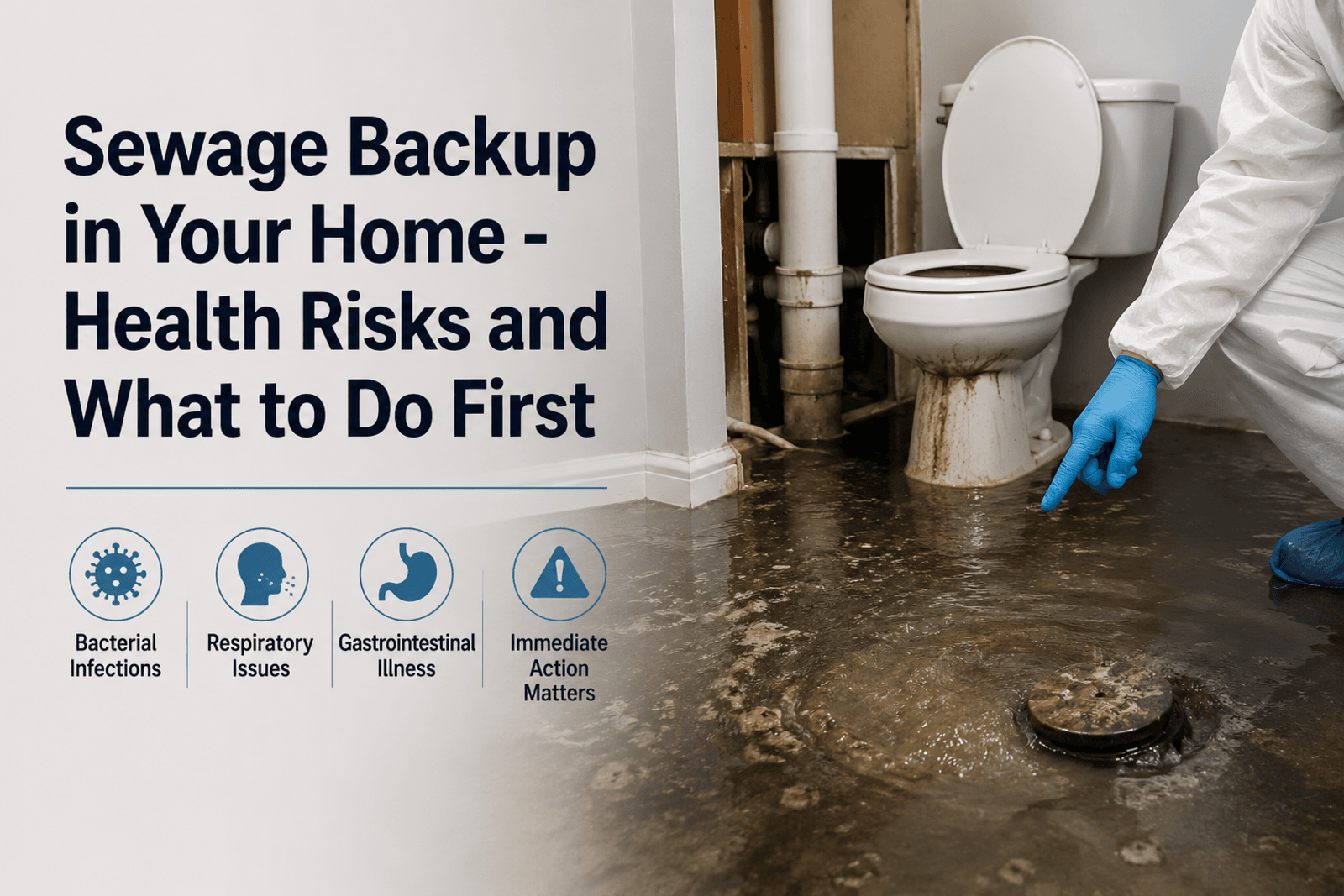
A sewage backup is an unpleasant mess that puts contaminated water on all sides of your home. Sewage is an unclean water that contains bacteria, viruses, parasites, and other harmful contaminants, which give rise to diseases with it. Sewage overflows can also cause property damage and threaten public health.
During a sewage backup Kansas City emergency, the first few steps are important. The main thing is to avoid contact with the water, stop the source, and get professional cleanup to protect your health and limit property damage.
What Causes a Sewage Backup?
Sewage backups happen when wastewater cannot move through the sewer system as it should. The blockage may be somewhere in your home’s plumbing or in the larger sewer system.
Some common causes of sewage backup include:
- Blocked sewer lines
- Tree roots or algae growing into pipes
- Damaged or broken sewer pipes
- Heavy rainfall and excess water entering sewer systems
- Grease and other materials building up in pipes
- Flushing items that do not go down the toilet
- Sewer system failures
- Plumbing problems inside the home
The EPA identifies blockages, line breaks, sewer defects, power failures, and other system problems as possible causes of sewer overflows.
A backup can begin with a slow-draining sink or toilet and develop into wastewater coming through floor drains, toilets, and other fixtures. In some cases, however, the problem appears suddenly with little warning.
Why Is Sewage Backup Dangerous?
Sewage is considered contaminated water. It can contain microorganisms and other substances that should not come into contact with people. A raw sewage can carry bacteria, viruses, protozoa, intestinal worms, molds, and fungi. Exposure to this can cause illnesses ranging from gastrointestinal problems to more serious infections.
The risk increases when sewage remains inside the home. Contaminated water can spread across floors and soak into porous materials. It can also reach areas that are difficult to see, such as beneath flooring or inside walls.
That means sewage cleanup is not simply about making the room look clean. The affected areas need to be properly removed, cleaned, disinfected, and dried.
What Health Risks Can Sewage Exposure Cause?
Direct contact with sewage can expose people to harmful microorganisms.
Possible health problems can include:
- Diarrhea
- Vomiting
- Stomach cramps
- Skin irritation
- Eye irritation
- Respiratory problems
- Infections
The actual risk depends on the type and level of exposure.
Children, older adults, pets, and people with certain health conditions need to take extra precautions around contaminated water. People should avoid contact with floodwater that may contain sewage because it can cause illness. If you have direct exposure and become ill, contact a healthcare professional.
What Should You Do First After a Sewage Backup?
The first priority is keeping people away from the contaminated area.
Do not walk through sewage water unless it is necessary for an immediate safety reason. Keep children and pets away as well.
If the backup is still active, determine whether you can safely stop the source. For example, you may be able to stop water use in the home while waiting for a plumber or restoration professional.
Do not attempt to clean a significant sewage spill with ordinary household cleaning supplies. Contaminated water can spread beyond the area you can see, and porous materials may need specialized treatment or removal. Once everyone is safe, contact a professional sewage cleanup company.
Should You Turn Off the Electricity?
Be careful around electrical systems. If sewage or water has reached electrical outlets, appliances, cords, or electrical equipment, do not touch them while standing in or near the water.
Do not enter a flooded area simply to reach an electrical panel. Contact a qualified professional if you are unsure whether the area is safe. The combination of water and electricity can create a serious shock hazard.
Should You Use Household Equipment to Remove Sewage?
It is better not to handle significant sewage contamination yourself. A regular wet/dry vacuum or household mop may remove some visible water, but it does not make contaminated surfaces safe. You may also spread contamination to other parts of the home.
Professional restoration companies use specialized extraction equipment, disinfectants, drying equipment, and protective procedures designed for contaminated water.
Rapid Dry specifically handles sewage removal in Kansas City and uses specialized equipment to extract contaminated water, remove affected materials, sanitize salvageable materials, and dry the structure.
What Happens During Professional Sewage Cleanup?
Professional sewage restoration generally involves several stages.
1. Inspection
Technicians first determine where the sewage came from and how far it has traveled. The visible area is not always the full extent of the damage. Sewage can move underneath floors, into walls, and into other parts of the property.
2. Contaminated Water Removal
The next step is extracting the sewage and contaminated water from the property. Rapid Dry uses specialized equipment to remove contaminated water and sewage from affected areas. Removing the water quickly helps prevent it from spreading further into the structure.
3. Removal of Damaged Materials
Some porous materials cannot be safely restored after sewage contamination. Depending on the situation, materials such as contaminated carpet, drywall, insulation, or other items may need to be removed and properly disposed of.
The professional sewage removal process includes removing and disposing of contaminated structural materials and personal items when necessary.
4. Cleaning and Disinfection
After contaminated materials are removed, salvageable surfaces need to be thoroughly cleaned and disinfected. This step removes remaining contaminants from surfaces that can safely be restored.
5. Drying
Water can remain in materials even after sewage has been extracted. Professional drying equipment removes remaining moisture from the structure. Rapid Dry uses air movers and dehumidifiers as part of its restoration process.
6. Final Inspection
The affected areas should be checked after cleanup and drying to identify any remaining moisture or areas that need additional restoration work.
How Quickly Should You Clean Up a Sewage Backup?
You should arrange cleanup as soon as possible. Sewage can continue spreading through porous materials while it remains inside the home. Delays can also increase the chance of secondary damage and make restoration more difficult.
Quick action does not guarantee that every damaged material can be saved. It does, however, give you a better opportunity to limit the spread of contamination and reduce additional damage.
Can Sewage Backup Cause Mold?
Yes. Sewage introduces both moisture and contaminants into the home. If affected materials are not properly dried, mold can develop.
The problem can be particularly difficult when moisture becomes trapped behind walls, under flooring, or in other hidden areas. This is why professional cleanup should include both sanitation and thorough drying along with mold removal services for properties affected by moisture problems.
What Should You Do With Items Touched by Sewage?
Not everything that comes into contact with sewage can be saved.
Porous items may absorb contaminated water and become difficult to clean properly. Examples can include:
- Carpet and carpet padding
- Upholstered furniture
- Mattresses
- Cardboard boxes
- Certain types of insulation
- Some drywall materials
Hard, non-porous items may be salvageable with appropriate cleaning and disinfection. A professional can help determine which belongings can be cleaned and which should be discarded. Avoid handling heavily contaminated belongings without appropriate protection.
How Can You Prevent a Sewage Backup?
You cannot prevent every sewer problem, but regular maintenance can reduce some risks.
Avoid flushing wipes, paper towels, feminine hygiene products, grease, and other items that can contribute to blockages. Even products marketed as flushable can contribute to sewer problems.
Watch for warning signs such as:
- Toilets that drain slowly
- Repeated toilet backups
- Slow drains throughout the home
- Gurgling sounds from plumbing
- Sewage odors
- Water coming up through a floor drain
If several drains begin slowing down at the same time, the problem may be larger than a single clogged fixture. Addressing these signs early may help prevent a more serious backup.
When Should You Call a Sewage Cleanup Professional?
You should call a professional whenever sewage has entered your home, particularly when there is standing contaminated water or damage to porous materials.
Professional help is especially important when:
- Sewage has spread across multiple rooms.
- Water has entered walls or flooring.
- Carpet or insulation has been contaminated.
- A sewer backup has affected the basement.
- You notice a strong sewage odor.
- The source of the backup is unclear.
- You cannot safely remove the contaminated water.
- You suspect mold after the backup.
Sewage is not a situation where surface-level cleaning is enough. The affected area needs to be made safe and properly dried.
What to Do If Sewage Backs Up Into Your Home
A sewage backup is an emergency, but knowing what to do can help you respond calmly.
Keep people and pets away from contaminated water. Avoid touching the sewage and be careful around electrical systems. Stop the source if you can do so safely, then contact a professional sewage cleanup company.
Do not focus only on removing the visible water. Sewage can enter flooring, drywall, walls, and other materials that need proper cleaning and drying.
If you are dealing with a sewage backup in Kansas City, Rapid Dry provides 24/7 sewage removal and restoration services. Our team can extract contaminated water, remove damaged materials, disinfect affected areas, and dry the structure.
FAQs
Is sewage backup considered an emergency?
Yes. A sewage backup involves contaminated wastewater and can pose health and property risks. It should be addressed as soon as possible by trained professionals.
Can I clean up a sewage backup myself?
No. Small plumbing issues can be managed easily, but significant sewage contamination should be handled professionally because it can contain harmful microorganisms and can spread into materials that are difficult to clean safely.
How long does sewage cleanup take?
The timeline depends on the amount of sewage, the size of the affected area, the materials involved, and the level of contamination..
What should I do if sewage gets into my basement?
Keep people and pets out of the affected area, avoid electrical hazards, stop the source if it is safe, and contact a professional sewage restoration company. Do not attempt to clean heavily contaminated water with ordinary household equipment.